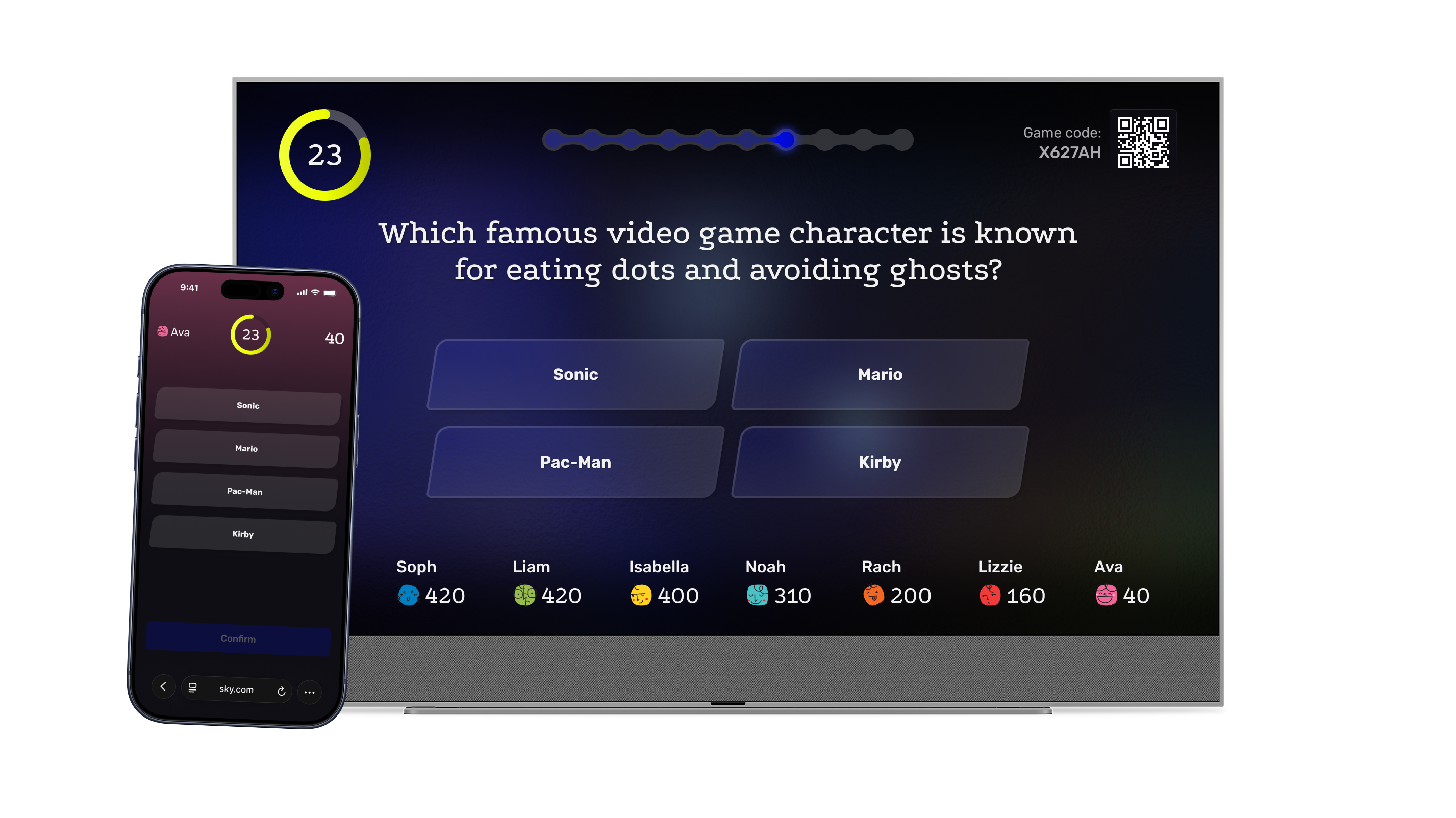
TVs on, phones ready, let the quiz begin. A multi-device quiz platform where the TV hosts and the phone runs the play. Shipped on Sky TV as Play Along in 2025, now Trivial Minds: one interaction system that re-skins per IP without rebuilding.
Outcome
Play Along launched on Sky TV as the first multi-device multiplayer quiz experience on the platform. Staff trials with 32 respondents validated the core interaction model before public release. Post-launch data confirmed sustained engagement, with sessions averaging over 8 minutes and roughly 1 in 3 launches resulting in a quiz being played. The MVP earned the runway to evolve: in 2026 the product was rebranded as Trivial Minds and the interaction model became the foundation of an IP-skinnable platform.
Challenge
Gaming is outpacing traditional TV: 16-34s now spend 114 min/day gaming, 82% of Comcast households are gamer households, and the industry is worth over $200bn. TVs are increasingly becoming gaming platforms through cloud gaming, removing all entry friction.
Sky had already proven the appetite for interactive TV, but no one had cracked a multiplayer, social quiz experience that bridged the TV screen with the phones already in everyone's hands. We had the Millionaire app as a foundation, but the goal was to expand into casual gaming and open up the capability and IP to partners.
How might we turn passive TV time into shared moments that bring families and friends together in the living room?
How I approached it
Four principles anchored every decision: modular, unite the living room, instinctive by design, inclusive for all. From those, three interaction calls shaped the whole dual-screen model. All three are mobile-first: once the quiz starts, every player action happens on the phone, the TV stays as the host display.
The TV hosts. The phone plays.
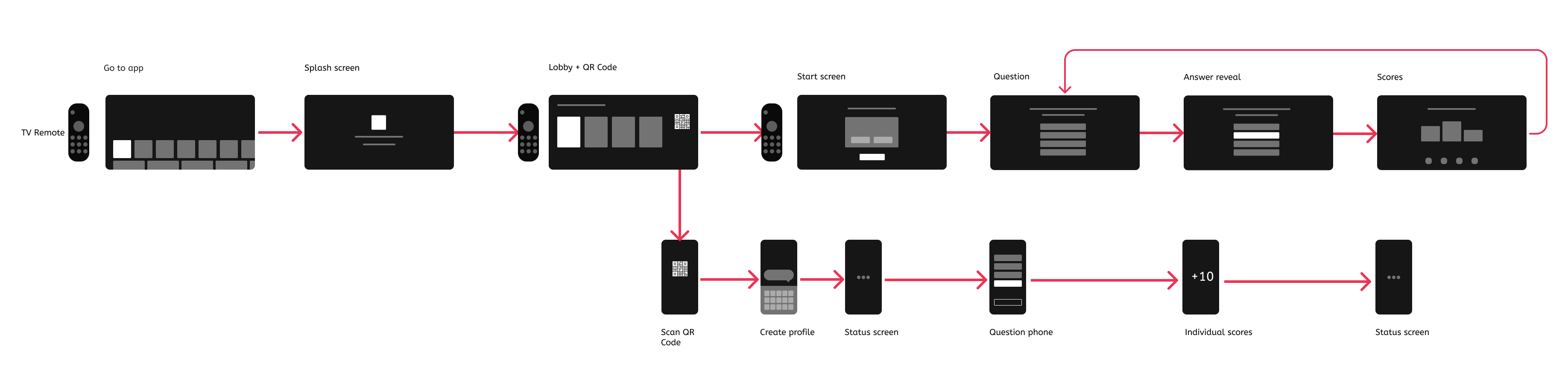
Once the host hits start, the TV runs the show. No remote fumbling, phones handle input.
A two-tap pattern (select, then confirm) prevents accidental answers when the countdown piles on pressure.
Shared on TV, private on phone. Attention bounces between the two, with built-in pauses for reactions and banter.
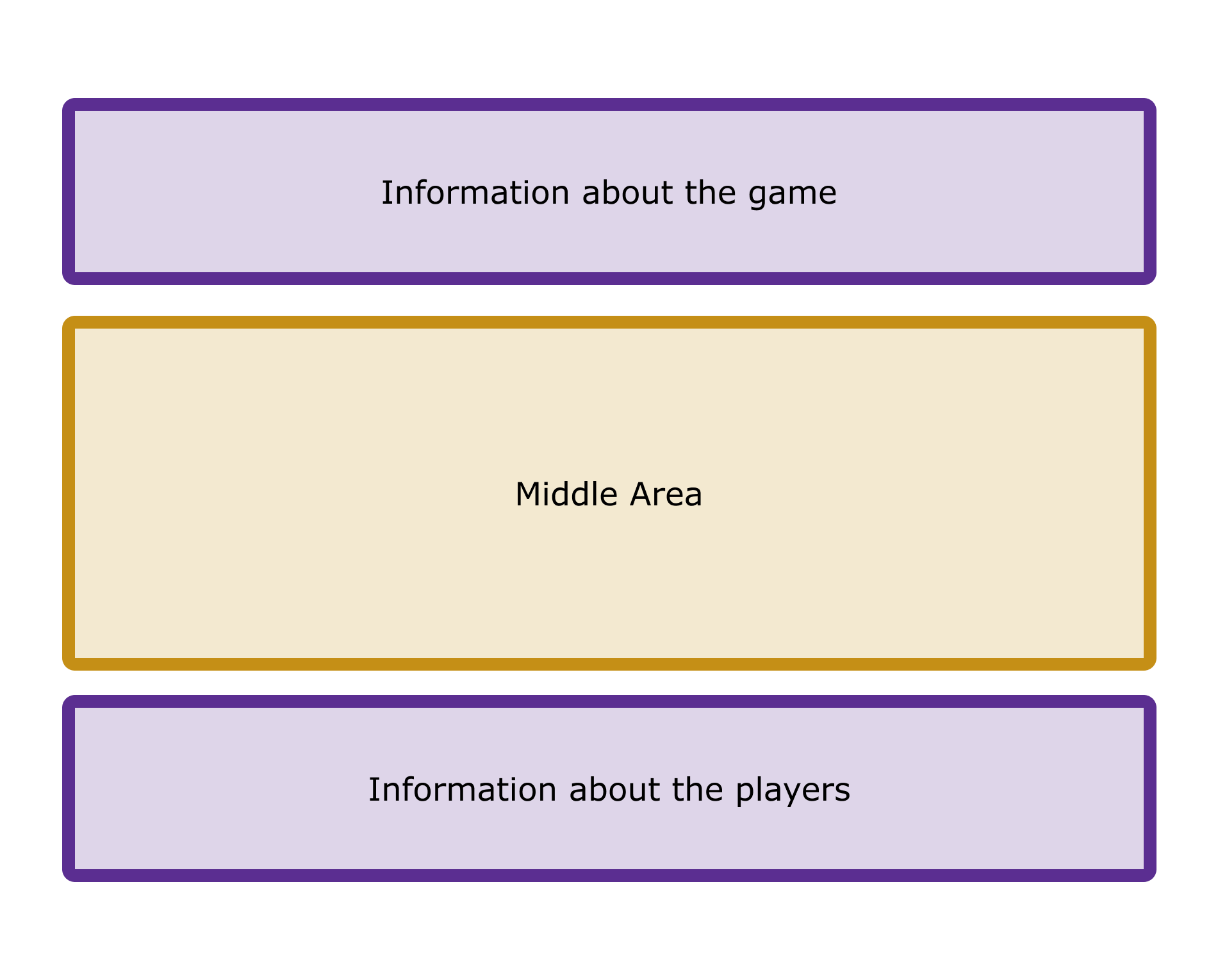
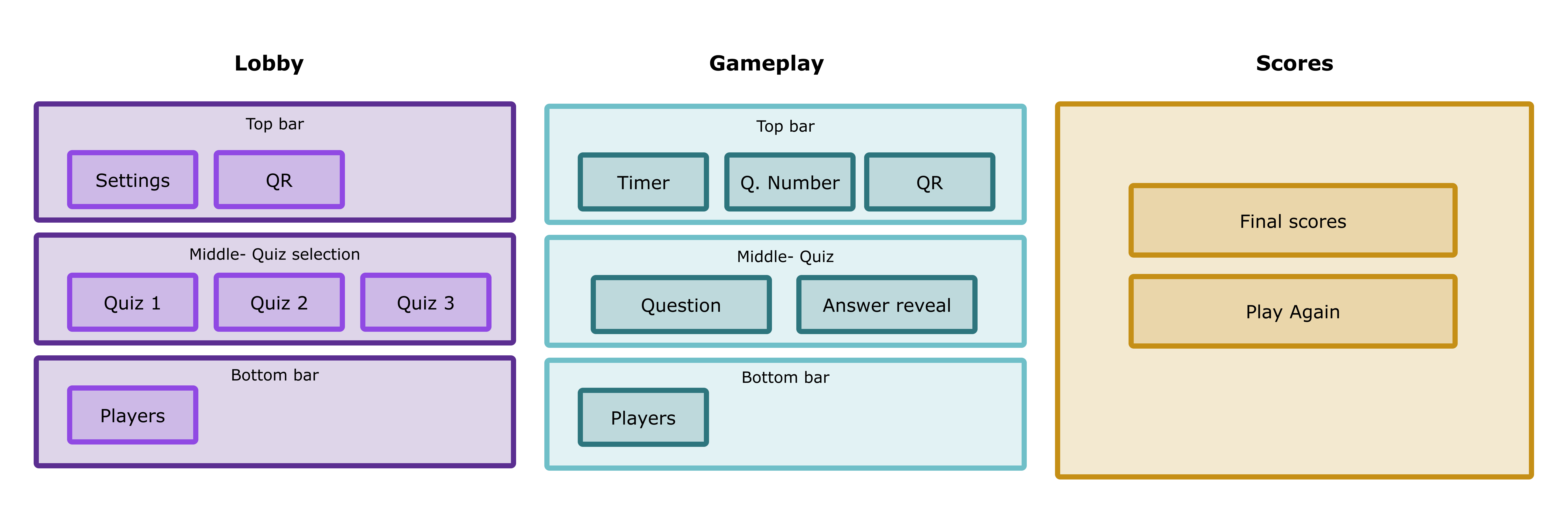
Three containers make up the app. The same structure carries through lobby, gameplay, and scores, so new quizzes and IPs plug in without rebuilding the frame.
With a countdown running and people shouting across the room, misclicks are constant. The extra tap protects the player from an irreversible mistake at second 3.
The MVP shipped QR only: faster to build and no typing on a TV remote D-pad. A typed code sits in the roadmap as a v2 fallback.
Orientation at the top, social presence at the bottom, a flexible main area between. Defined in the IA as modular zones.
Walkthrough
Reflection
Play Along shipped as an MVP with room to grow. That was the point. Get the interaction model into real living rooms, then let real behaviour decide what comes next.
Standard metrics miss what matters in a dual-screen game. The signal I’d watch next is the gap between the TV moment and the phone tap, where attention drops between the two screens. That’s where the rhythm breaks.
The frame had to stay stable while the skin changed. I built the layout so a new IP re-skins without touching the core structure. That’s what let Play Along become Trivial Minds without a rebuild.
Getting it live taught us more than more polish would have. Real habits pointed to the next micro-interactions and motion passes. You learn the right details by watching people use the wrong ones.
More work