03 · What I built
A workshop that converted risk into a named mitigation and an owner
The centrepiece was a hybrid workshop designed and facilitated on Miro, built around three named stages: lightning talks framing Sky Live from multiple perspectives; a structured risk-mapping block using Ethical Explorer and Layers of Effect tailored to Sky Live; and a "What now?" stage that converted each named risk into actionable insight, a design mitigation, and an owner.
The workshop ran in three stages: a lightning talk to align everyone on what Sky Live does with data; a structured risk-mapping block using Ethical Explorer and Layers of Effect to name and forecast each risk; and a "What now?" stage where every risk came out with a committed action, a named owner, and the people still needed to make it happen. No risk left the workshop unassigned.
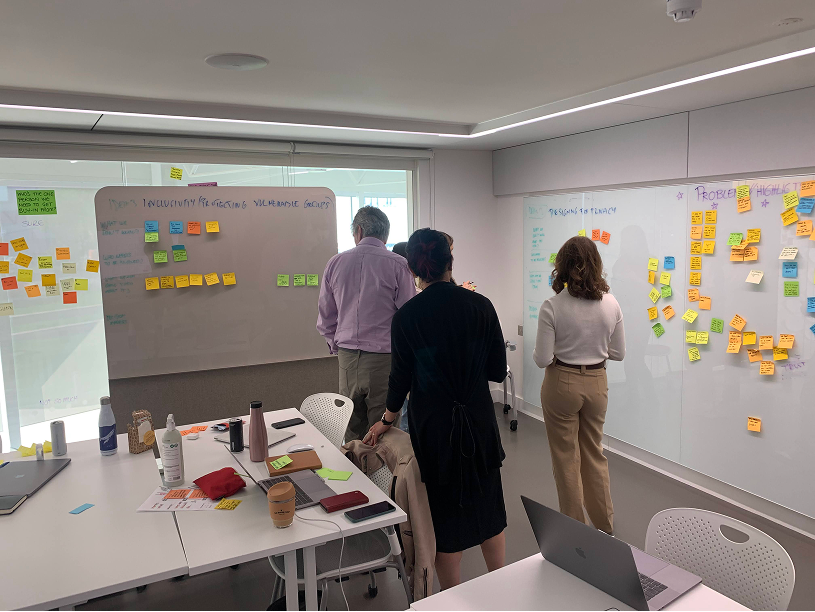
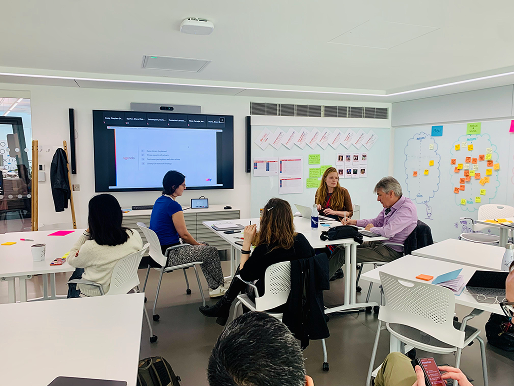
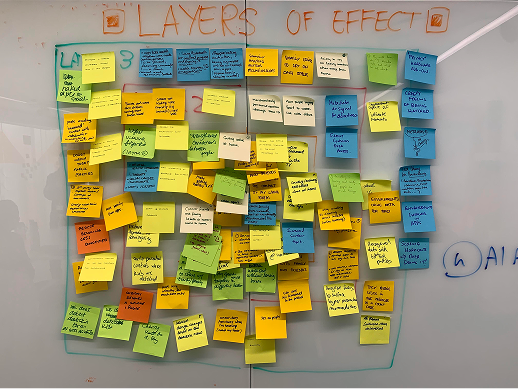
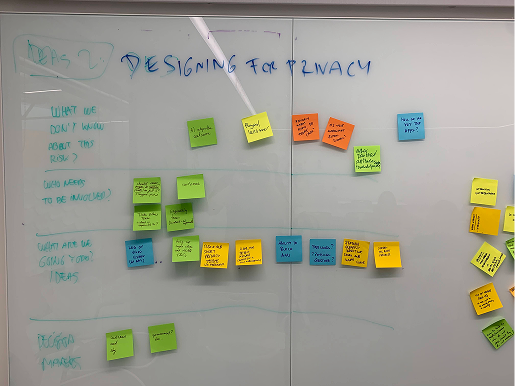
Five areas of concern, two I owned end to end
Privacy, in lieu of a physical shield
A camera-first device in the home introduced real risks: surveillance, stalking, hacking. These needed explicit design mitigations, not just policy statements. I owned this thread from risk framing through to the "Your privacy protected" onboarding and hardware mute-button messaging.
Inclusivity
Face detection reliant on ML is fallible and risks excluding users. Children's rights, positive self-image, and non-violent values needed active consideration. I owned this through to the no-beautifying-filters statement in Video Booth.
Trust, bad actors, AI harm
The remaining threads, held across the DEN: the consent gap between what the service did and what customers understood it to do; Watch Together risks around inappropriate broadcasts and unsupervised children; and model bias from insufficiently diverse training data.
Artefacts beyond the workshop
Digital Ethics Framework
Built on Ethical Explorer and Layers of Effect as a Miro-based template for teams to adopt in their own projects. Served as a shared tool to spark discussion, align stakeholders, and surface the ethical impact of design decisions before they shipped. A workshop-outcomes deck captured the risks and initiatives for ongoing reference.
AI and Digital Ethics talks
A series of talks across Sky teams on how designers should approach AI responsibly. Covered practical AI use cases, machine learning concepts, model cards, and the UX challenges of AI-driven products, all pre-GenAI.